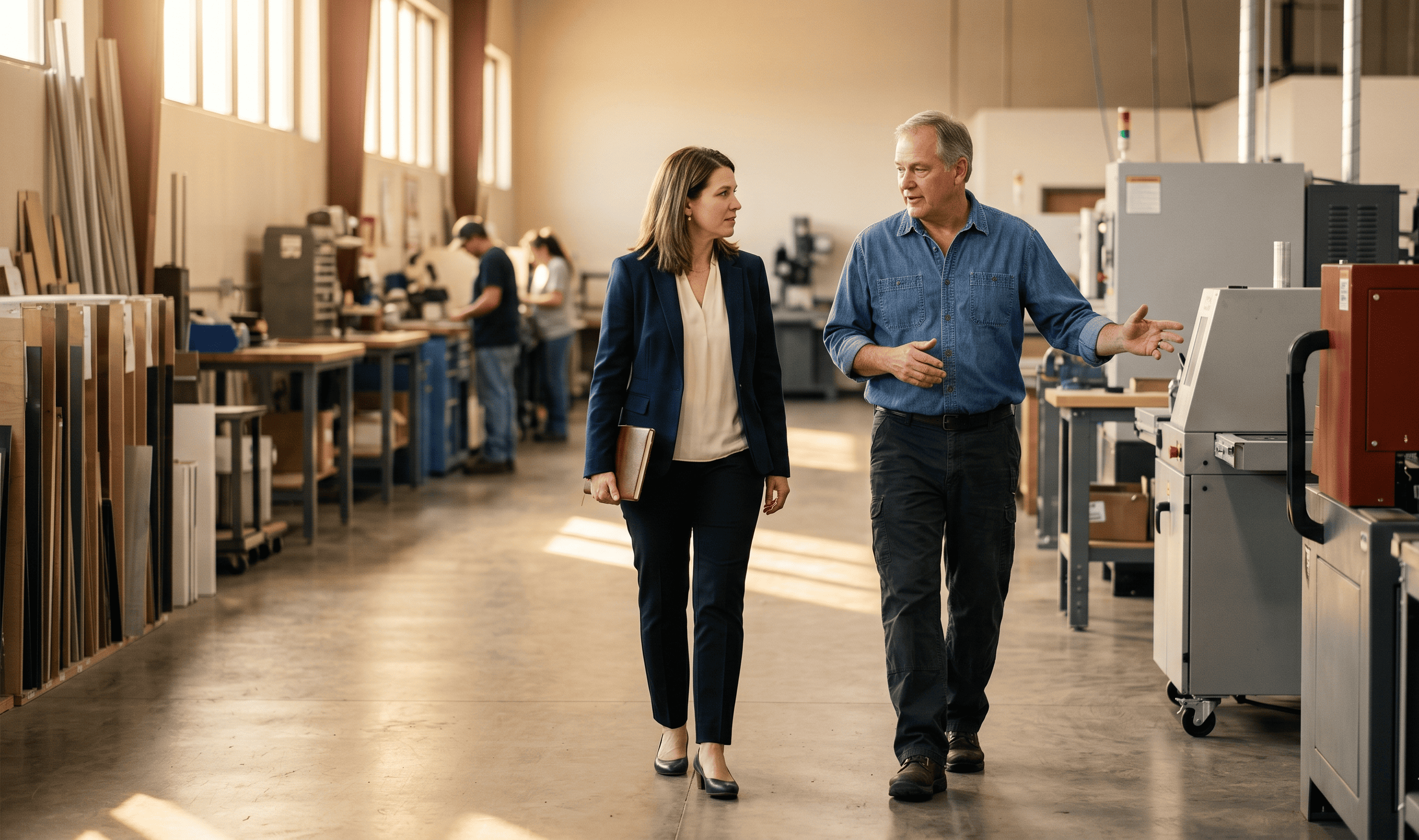
The Wisconsin manufacturing sector is experiencing a transformative period, with manufacturing M&A activity reaching strong levels driven by technological disruption, generational transition, and strategic repositioning. As the backbone of Wisconsin's economy, representing approximately 19% of state GDP and employing over 450,000 workers, manufacturing businesses are attracting interest from a diverse buyer universe ranging from strategic industrial consolidators to private equity firms seeking advanced manufacturing platforms.
Understanding the current manufacturing M&A environment in Wisconsin requires recognizing both the unique opportunities created by the state's industrial heritage and the emerging challenges posed by technological evolution, supply chain reconfiguration, and changing buyer expectations. The state's manufacturing ecosystem, from Milwaukee's precision machining corridor to the Fox Valley's paper and packaging dominance and Madison's emerging high-tech manufacturing cluster, presents specialized considerations that differentiate Wisconsin transactions from national trends.
Whether you are a second-generation owner contemplating succession, a founder considering strategic partnerships, or an operator seeking growth capital through partial sale, this guide provides the essential knowledge needed to maximize value and achieve optimal outcomes in Wisconsin's dynamic manufacturing M&A market.
In This Guide
What You'll Learn
The Wisconsin Manufacturing M&A Landscape
Wisconsin's manufacturing M&A market continues to benefit from several converging forces: robust buyer demand, strong private equity interest in industrial platforms, and a generational transition wave as baby boomer owners approach retirement. Deal activity remains healthy across the state, with particular strength in advanced manufacturing, food processing, and industrial technology.
Key Manufacturing M&A Trends
Four interconnected forces are reshaping how Wisconsin manufacturing businesses are valued and acquired. Understanding where your business sits relative to these trends helps you anticipate how buyers will evaluate your operation.
01
Technology Integration as Primary Value Driver
Businesses that have invested in IIoT sensors, predictive maintenance systems, automation cells, and data analytics are attracting significantly stronger buyer interest than traditional operations. The gap between technology-enabled and traditional manufacturers continues to widen.
02
Supply Chain Resilience and Reshoring Premiums
The reshoring trend and supply chain diversification have created favorable dynamics for Wisconsin manufacturers with documented supply chain resilience. Buyers are prioritizing diversified supplier bases, domestic sourcing capabilities, and contingency planning.
03
ESG Integration and Sustainability Focus
Environmental, social, and governance considerations are playing an increasingly important role in manufacturing M&A. Clean environmental records, sustainable practices, and documented compliance are becoming baseline expectations for sophisticated buyers.
04
Succession Wave Acceleration
A growing wave of baby boomer manufacturing owners are approaching retirement age, increasing deal flow and creating opportunities for buyers. Owners who plan ahead and prepare their businesses for transition are positioned to capture the strongest outcomes.
Buyer Profiles and Strategic Motivations
The Wisconsin manufacturing buyer ecosystem has diversified significantly, with traditional strategic acquirers now competing with increasingly sophisticated financial buyers, international investors, and hybrid entities. Understanding these buyer profiles and their respective motivations is essential for positioning manufacturing businesses effectively.
Buyer selectivity and due diligence intensity. Despite abundant capital, buyer selectivity has increased. The quality threshold for "investable" manufacturing businesses has risen, with particular scrutiny on technology infrastructure, environmental compliance (especially for manufacturers with legacy facilities), customer concentration risk, and management succession readiness. Manufacturers lacking in these areas may face extended marketing periods and valuation discounts.
Valuation Drivers for Wisconsin Manufacturers
Two similar Wisconsin machining businesses with comparable EBITDA can receive very different valuations based on their technology profile. A traditional manufacturer with manual processes and basic CNC equipment will typically attract a narrower buyer pool and weaker offers compared to a technology-enabled manufacturer with automated cells, IIoT sensors, predictive maintenance, and digital capabilities. The difference can be substantial, reflecting the market's assessment of future competitiveness and scalability. A professional advisor can help benchmark where your business falls on this spectrum.
The Technology Premium
Two Identical EBITDAs, Two Different Valuations
Technology profile is now one of the clearest dividing lines in Wisconsin manufacturing M&A. Buyers consistently pay more for businesses that have demonstrably invested in automation, sensors, and digital infrastructure, because those investments signal future competitiveness and scalability that traditional operations cannot match.
| Value Driver |
Why It Matters |
Wisconsin Considerations |
| Technology Integration |
Signals scalability and future competitiveness. Buyers see tech-enabled manufacturers as lower risk. |
Wisconsin's technical college system supports technology adoption; workforce training programs available. |
| Management Depth and Succession |
Reduces key person dependency and transition risk. Strong second-tier leadership gives buyers confidence. |
Wisconsin's manufacturing extension partnerships provide succession planning resources. |
| Supply Chain Resilience |
Diversified, documented supply chains reduce risk and signal operational maturity. |
Wisconsin's central location and logistics infrastructure provide natural advantages. |
| Customer Diversification |
Balanced revenue base reduces concentration risk, one of the most common deal-breakers. |
Manufacturers serving diverse sectors (medical, aerospace, industrial) are well-positioned. |
| Environmental Compliance |
Clean records reduce buyer risk and facilitate smoother due diligence. |
Particularly valuable given Wisconsin's regulatory environment. |
| Intellectual Property |
Patented processes or proprietary methodologies create defensible competitive advantages. |
Wisconsin manufacturers with documented IP attract premium buyer interest. |
The Manufacturing M&A Process: Wisconsin-Specific Timeline
Manufacturing transactions in Wisconsin follow a structured process with specific considerations unique to industrial businesses. Understanding this timeline and key milestones is essential for successful navigation.
| Phase |
What Happens and Wisconsin-Specific Considerations |
|
PHASE 01
Preparation and Packaging
|
Typically beginning 6 to 12 months before going to market. Financial normalization, operational documentation, equipment appraisals, environmental assessments, and creation of professional marketing materials. |
|
PHASE 02
Confidential Marketing
|
Targeted buyer outreach through confidential channels, initial meetings with qualified buyers, and collection of indications of interest. Maintaining confidentiality is particularly important in tight-knit Wisconsin manufacturing communities. |
|
PHASE 03
Due Diligence and Negotiation
|
The most intensive phase, covering financial, operational, environmental, and legal examination. Manufacturing due diligence is typically more thorough than other industries due to equipment, environmental, and regulatory complexity. |
|
PHASE 04
Closing and Transition
|
Final agreement execution, closing coordination, and transition planning. Wisconsin manufacturing transitions often include seller consulting agreements to facilitate technical knowledge transfer. |
Common Pitfalls in Wisconsin Manufacturing Transactions
Five recurring issues account for most failed or value-eroded Wisconsin manufacturing transactions. All five are addressable with sufficient lead time.
- Undervaluing equipment condition. Deferred maintenance discovered during due diligence leads to price reductions that can significantly exceed the actual repair costs, as buyers also factor in downtime and risk.
- Underestimating environmental liabilities. Legacy contamination issues can derail transactions or require significant escrow holdbacks.
- Poor confidentiality management. Leaked sale information can damage customer relationships and employee morale in tight-knit manufacturing communities.
- Inadequate management succession planning. Buyer concerns about post-closing leadership can collapse deals or meaningfully reduce valuations.
- Technology readiness gaps. Failure to demonstrate digital maturity reduces valuation and limits the buyer pool to traditional operators only.
Preparation Checklist for Wisconsin Manufacturing Owners
Comprehensive preparation breaks into three categories: financial cleanup that establishes the baseline, operational documentation that demonstrates maturity, and strategic positioning that signals future potential.
Financial Preparation
- ✓Three years of accrual-basis financial statements
- ✓Detailed fixed asset register with depreciation schedules
- ✓Normalization of owner compensation and expenses
- ✓Documentation of all EBITDA adjustments with supporting records
- ✓Analysis of gross margins by product line and customer
- ✓Inventory valuation and obsolescence review
Operational Preparation
- ✓Comprehensive equipment maintenance records and certifications
- ✓Environmental compliance documentation and assessments
- ✓Quality control procedures and certification documentation
- ✓Supply chain diversification analysis and initiatives
- ✓Customer concentration reduction programs
- ✓Key employee retention and incentive planning
Strategic Preparation
- ✓Technology roadmap and implementation progress
- ✓Management succession plan and team development
- ✓Competitive positioning analysis
- ✓Intellectual property documentation and protection
- ✓Facility condition assessment and improvements
- ✓Growth projection model development
Unsure About Your Manufacturing M&A Position? Get Professional Guidance
The convergence of favorable market conditions, technological transformation, and generational transition creates strong opportunities for Wisconsin manufacturing owners. Realizing the best possible outcomes requires strategic preparation, professional positioning, and careful timing aligned with market dynamics.
Our Wisconsin-focused manufacturing M&A team provides specialized expertise in industrial transactions, combining deep sector knowledge with extensive transaction experience. We offer confidential, no-obligation assessments of your manufacturing business's current market position, valuation potential, and customized preparation roadmap.
Schedule Your Manufacturing M&A Assessment
Assessment includes: Current valuation analysis, technology readiness evaluation, buyer positioning assessment, and customized preparation timeline development.


.png)